
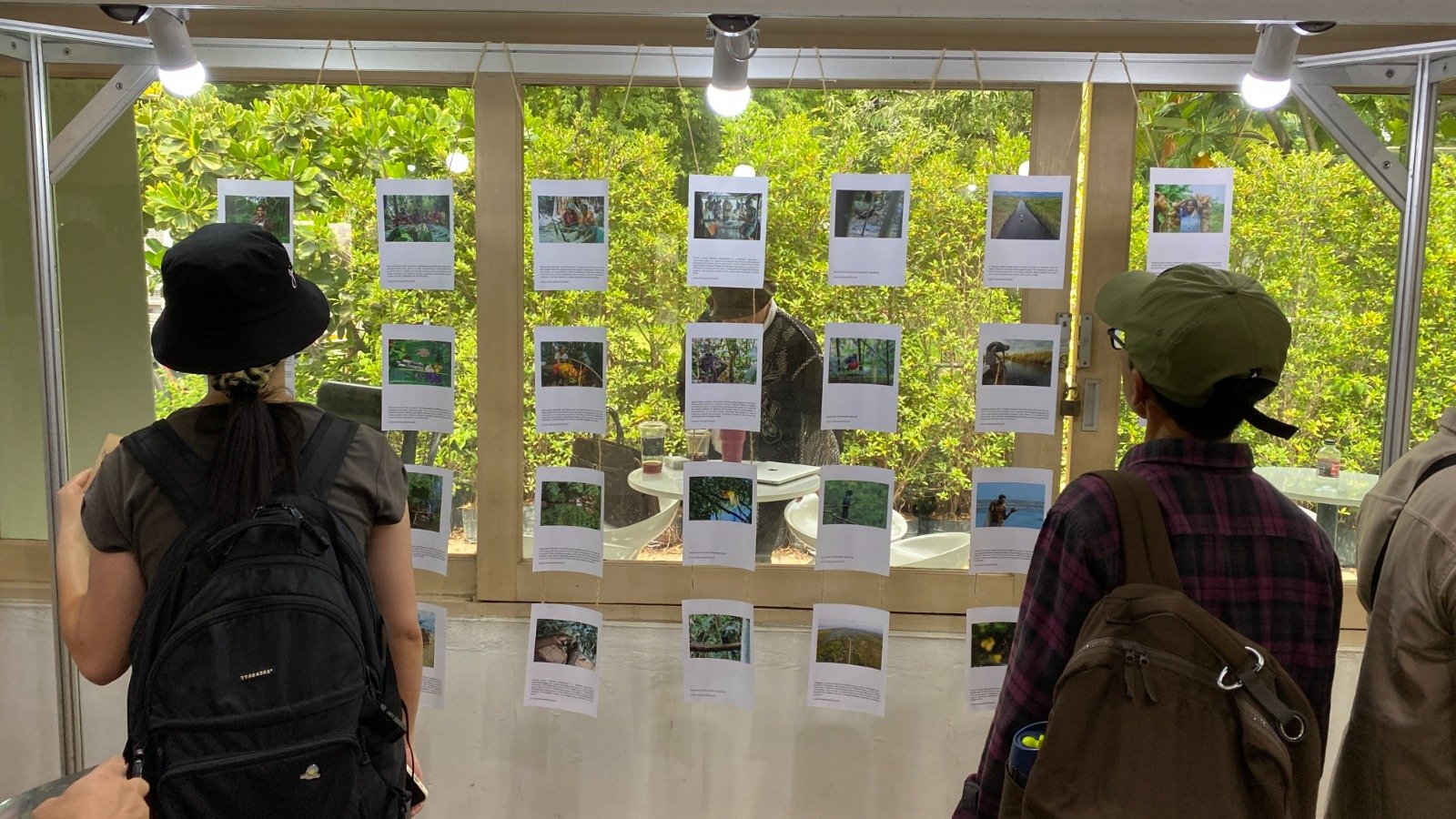
Visitors explore the photo and product exhibition at the Nature-Based Economy Pavilion from October 5-7, 2026. The pavilion was initiated by the Koalisi Ekonomi Membumi (Earth-centred Coalition) as part of its participation in Bangkok Climate Action Week 2026.
Amidst the opposing tensions of climate crises and economic development, Indonesia paves a possibility for Bangkok Climate Action Week 2026, and asks: what if we can build an economy that creates value from biodiversity without compromising our ecosystems? Through the Nature-Based Economy Pavilion, Koalisi Ekonomi Membumi (KEM, translated as Earth-Centred Coalition) brings together businesses, communities, buyers, investors, government, and civil society organizations to demonstrate how a responsible bioeconomy can move beyond ideology towards systemic change, such as the implementation of value chains.
Bangkok, 5 October 2026 — Koalisi Ekonomi Membumi (KEM) launches the Nature-Based Economy Pavilion at Bangkok Climate Action Week (BKKCAW), held at Lumphini Park, Bangkok, Thailand, from 5–7 October 2026. KEM Executive Director Fito Rahdianto said the pavilion provides an open space for advocates and stakeholders to share stories, experiences, and climate solutions tailored to the vulnerabilities of their respective regions.
According to Fito, the presence of the Nature-Based Economy Pavilion demonstrates the work of Indonesian communities who have actively built economic value through partnerships with the ecosystems closest to them. The pavilion also serves as living proof of the connections, shared commitment, and solidarity among countries of the Global South in driving climate action and global sustainability. “We believe climate action strategies must not be closed or isolated, but must instead be pursued through active collaboration among all stakeholders,” Fito said on Monday, 5 October 2026.
Throughout the event, the Nature-Based Economy Pavilion will host a range of programs, including collaborative discussions, art exhibitions and product showcases, as well as the provision of a platform of solidarity amongst Southeast Asians and people of the Global South to share their lived experiences (and solutions) amidst the climate crisis. Participants include a diverse range of civil society actors, including civil society advocates, journalists, social entrepreneurs, impact investors, artists, and researchers from a diverse cohort of countries across the region.
Countries located in the Global South, including Indonesia, face structural vulnerabilities, rapid yet poorly planned urbanization, and limited climate adaptation infrastructure. As a concrete example, just one week before BKKCAW, Bangkok, Thailand was hit with major floods where an estimated twenty-four people died, with more than 300,000 families affected. It was recorded as the heaviest rainfall in 15 years, and led to the Bangkok state to declare the city’s state of emergency.
Shortly afterwards, Johor Bahru, Malaysia, was similarly struck by floods. This series of floods occurred less than a year after flash floods hit three Indonesian provinces—Aceh, North Sumatra, and West Sumatra. Hydrometeorological disasters have likewise become common occurrences across countries throughout the Global South.
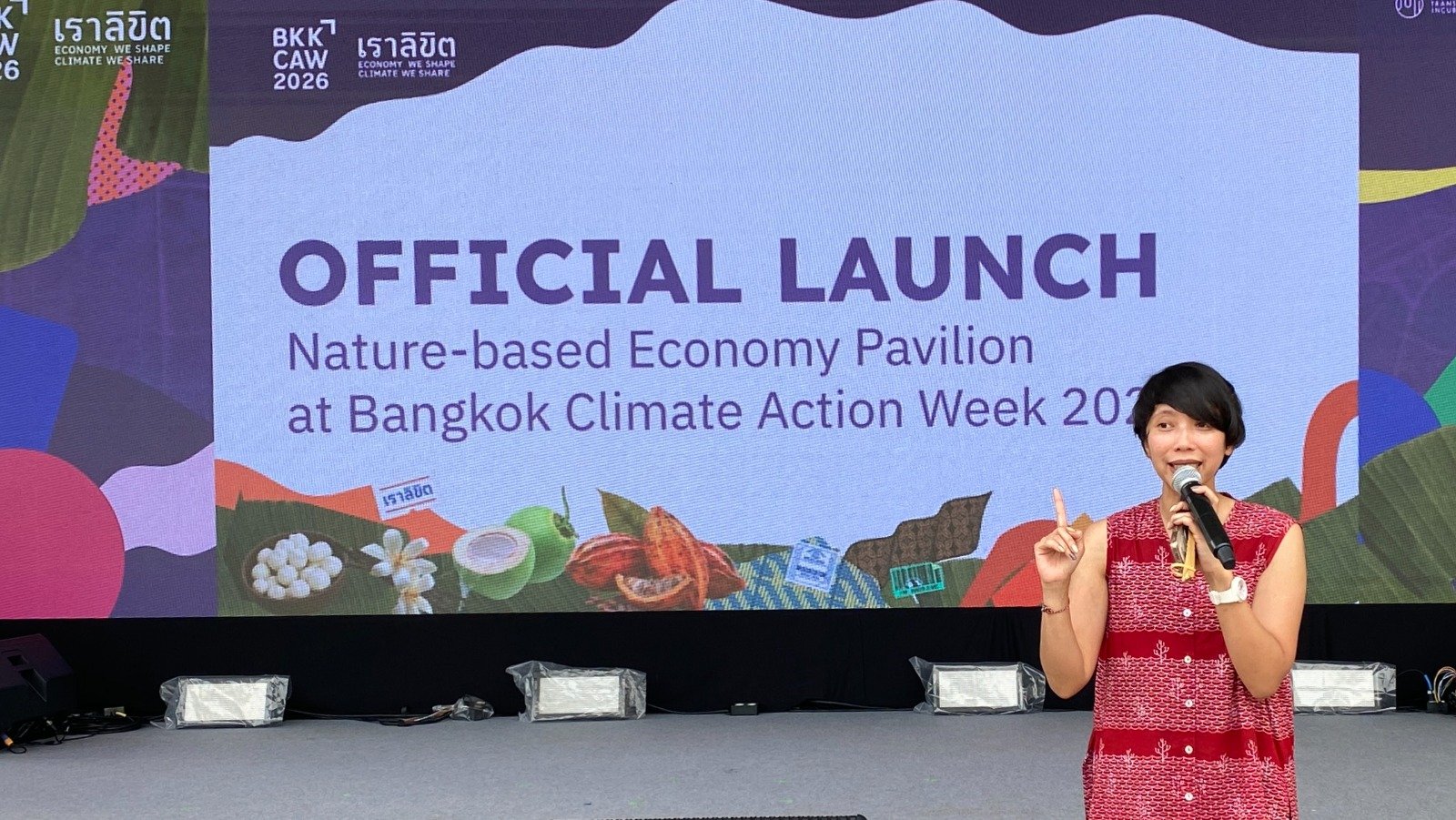
Head of Executive Board of Koalisi Ekonomi Membumi, Gita Syahrani opened the Nature-Based Economy Pavilion on October 5, 2026, at Lumpini Park in Bangkok, Thailand. The Nature-Based Economy Pavilion was featured during Bangkok Climate Action Week, held from October 3-11, 2026.
KEM believes that the Nature-Based Economy Pavilion can incite collective action between Indonesia and communities across the Global South to shape the future through a spirit of collaboration, in line with the theme of BKKCAW 2026, Rao Likit, meaning determining our own destiny. The Nature-Based Economy Pavilion holds evidence of an active solution realised among the growing connection amongst producers, off-takers and industries, capital owners, civil society, and governments, whilst ensuring the protection of social and environmental well-being.
Through the nature-based economy, KEM seeks to fulfill a vision of responsible Indonesian bioeconomy by 2045, which could drive an 18 percent increase in Gross Domestic Product, estimated to reach Rp50.71 trillion. In working toward the Indonesia Bioeconomy Initiative (IBI) 2045, KEM also aims to reduce national carbon emissions by up to 0.38 billion tonnes of carbon dioxide (CO2) per year. This ambition requires the involvement of actors and communities who are critically reassessing the extractive practices embedded in the economic system.
“If dreaming of a better world is considered too idealistic, the very least we can do is offer a new perspective to imagine a way of life that goes beyond the extractive system we have inherited,” Fito concluded.
BKKCAW is an annual city-based climate festival that brings together communities, governments, businesses, artists, and civil society organizations to collectively design lived solutions to the climate crisis. The event provides a platform for civil society organizations, local communities, youth, and academics across the ASEAN region to voice the real-world impacts of climate change and to support advocacy efforts ahead of COP31, which will take place from 9–20 November 2026 in Antalya, Türkiye.
======
About Koalisi Ekonomi Membumi (KEM)
Koalisi Ekonomi Membumi (KEM) is a collective movement transforming Indonesia’s economic system beyond extractive practices and large-scale monoculture plantations. As part of the Indonesia Bioeconomy Initiative, KEM envisions an Indonesian economy aligned with nature—ensuring a fair distribution of prosperity across economies and ecologies.
About JustCOP
Justice Coalition for Our Planet (JustCOP) is a civil society network advocating for rights-based and democratic climate governance, placing affected communities at the forefront of change.