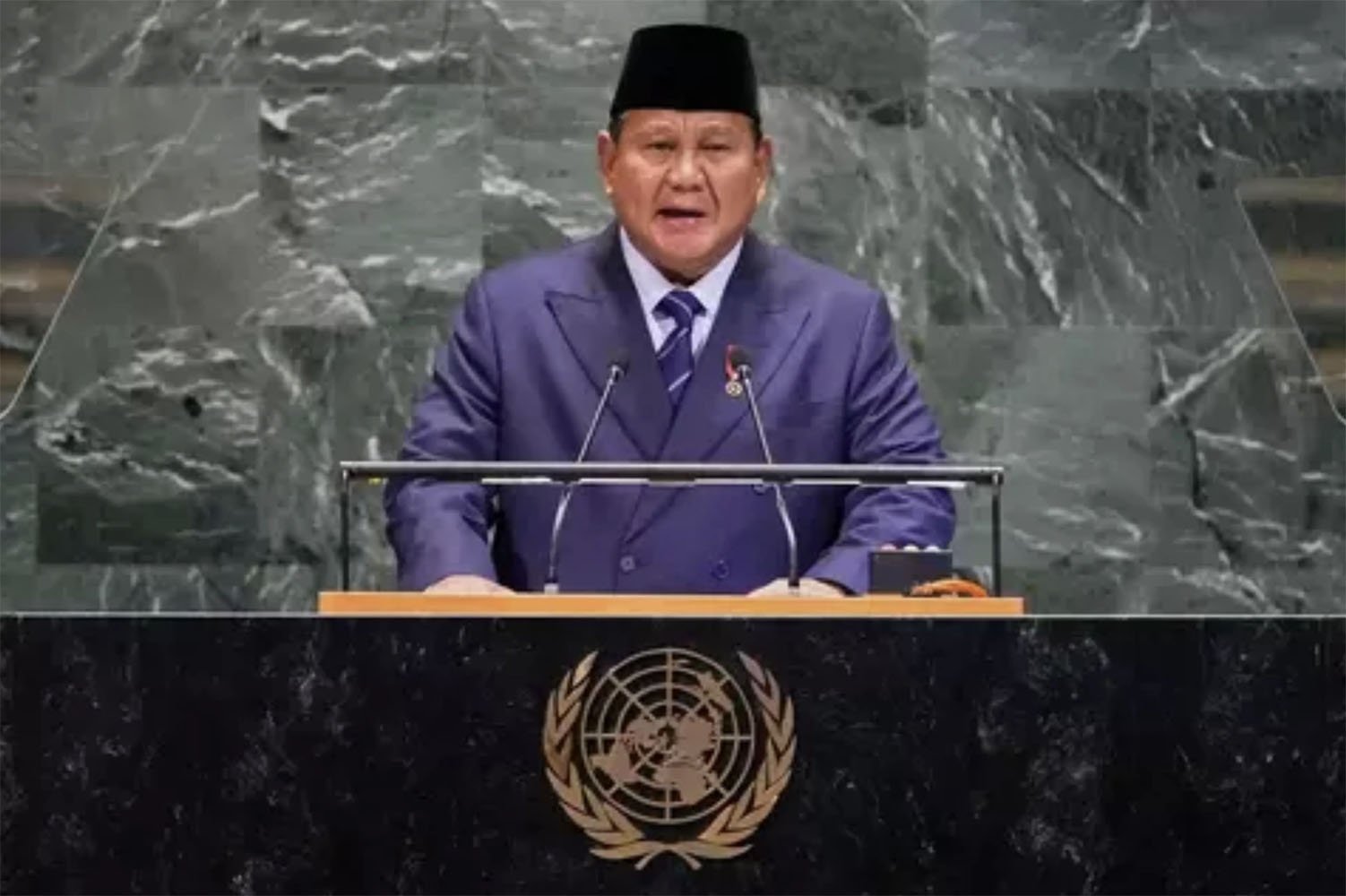
Prabowo Speech at UN. Source: Jakarta Globe
When President Prabowo Subianto stepped onto the UN stage after a decade of Indonesia’s absence, it was meant to be a comeback. His words were big, even ambitious: rice self-sufficiency, 12 million hectares of reforestation, seawalls stretching 480 kilometers, and a pledge of net-zero emissions by 2060 or sooner.
In New York, before world leaders like Brazil’s Lula da Silva and U.S. President Donald Trump, Prabowo presented Indonesia as a country ready to lead in the fight against the climate and food crises.
But here at home, the picture looks far less inspiring.
The Rice Paradox
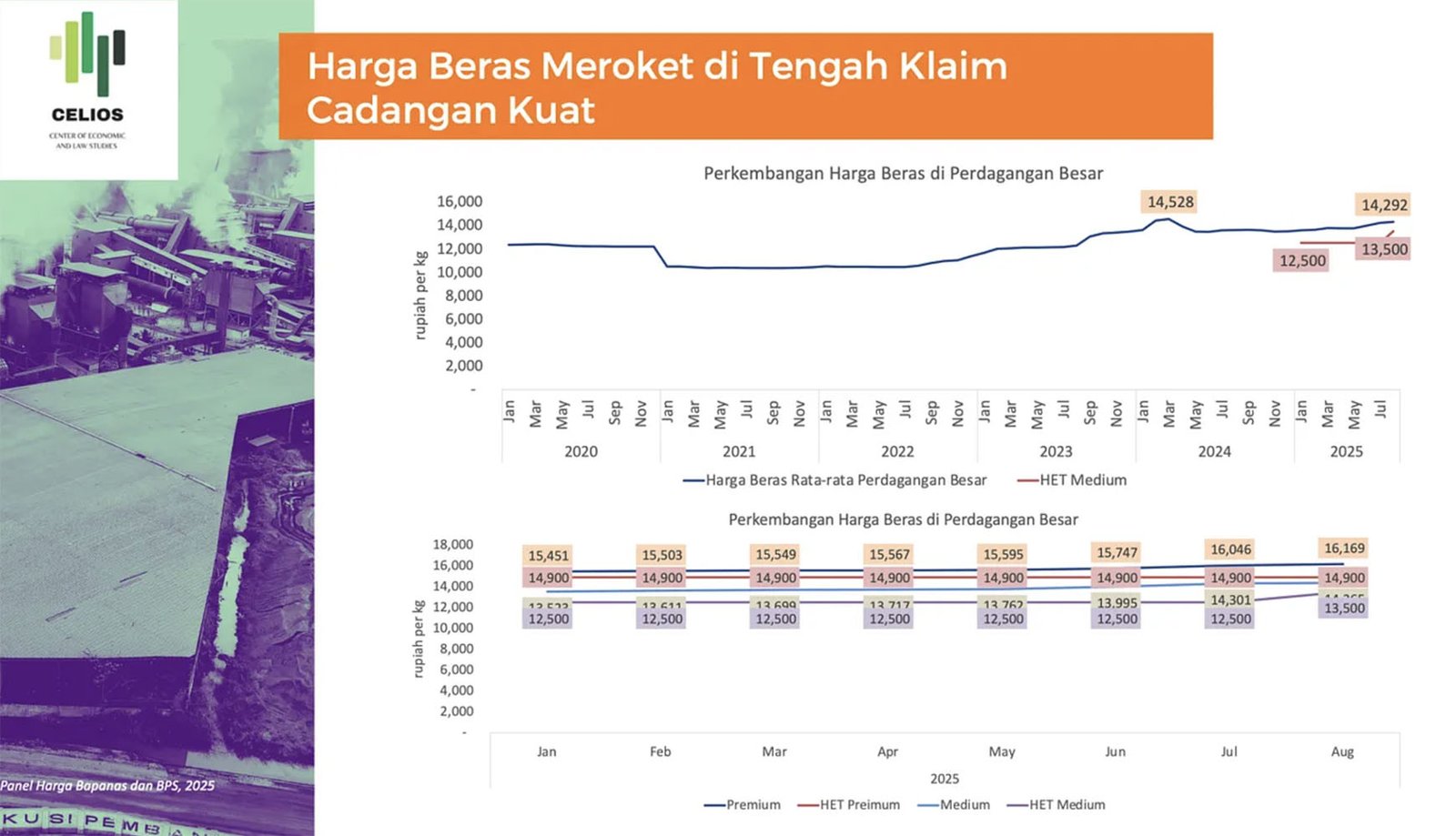
“Rice Prices Soar Amid Claims of Strong Reserves, 2020–2025” Source: Celios
Prabowo claimed rice self-sufficiency. Yet the numbers tell another story. Rice fields have shrunk, harvests have fallen, and prices keep climbing, reaching Rp 18,000 per kilogram in Papua, far above the official ceiling.
For farmers and families, this is not a matter of abstract statistics. It is the strain of daily survival, of paying more for less, while being told that the country has already “arrived” at sufficiency. The dissonance is hard to ignore.
Climate Commitments on Paper, Not in Practice
Indonesia has missed its deadline to submit its Second Nationally Determined Contribution. The world waits for updated commitments, yet the government delays.
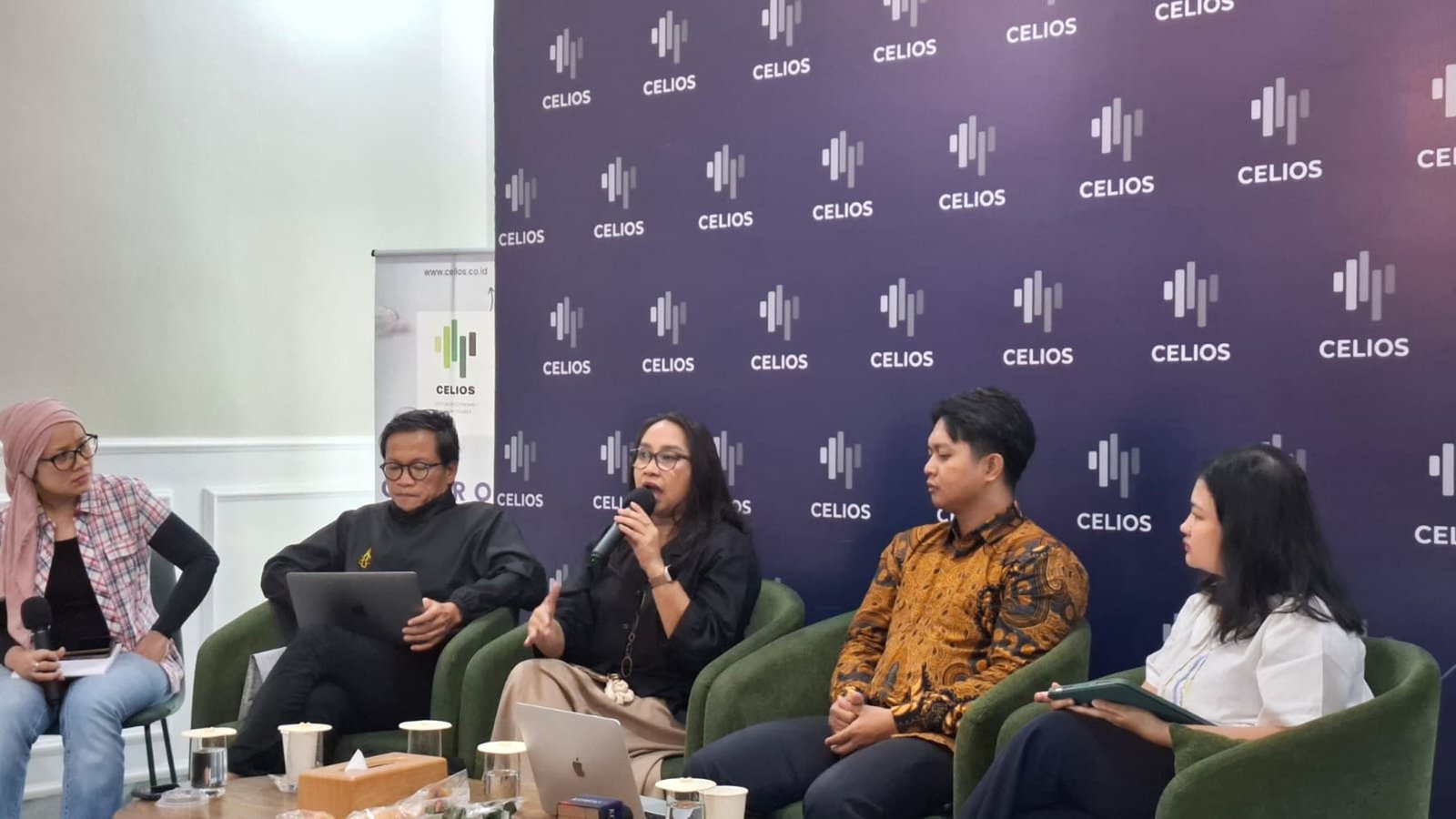
Nadia Hadad; “The climate crisis is not just technical, it is deeply political. It is about inequality, where the wealth of 50 people equals that of 50 million, built on extractive industries that erode both ecosystems and justice.” Source: JustCop, September 2025
Nadia Hadad of Madani Berkelanjutan reminds us: the climate crisis is not just technical, it is deeply political. It is about inequality, where the wealth of 50 people equals that of 50 million, built on extractive industries that erode both ecosystems and justice.
What use is an 8% GDP growth target if it comes at the expense of forests, biodiversity, and the very communities who safeguard them? Lula called for climate finance to protect tropical forests. Prabowo did not. The silence speaks volumes.
The Mirage of Renewable Energy
Civil society warns that Indonesia’s energy transition is faltering. The latest targets are less ambitious than before, locking us into fossil fuels well into the next decade.
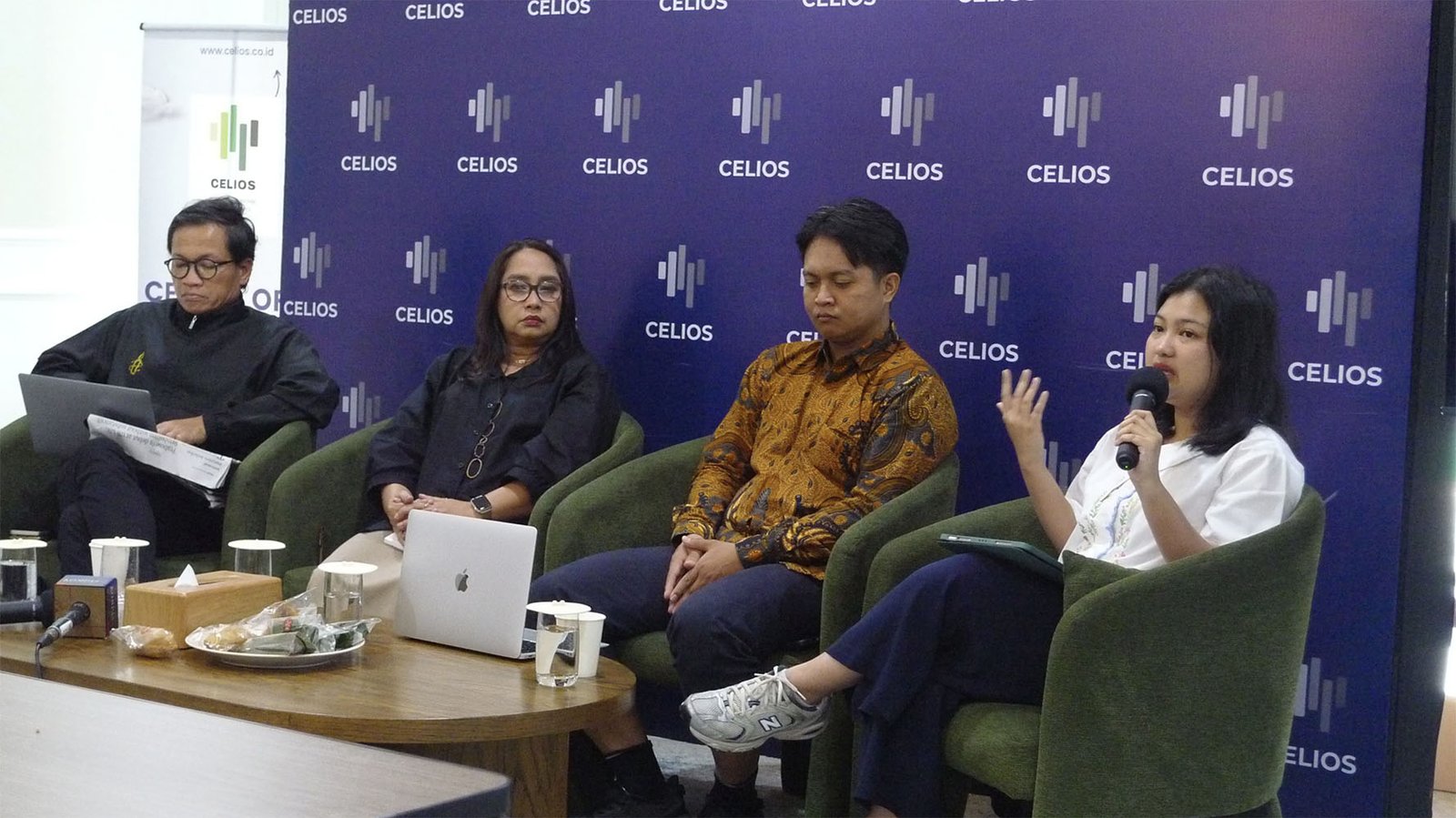
Saffanah Azzahra; “With fossil fuels dominating 79% of the energy mix by 2030–50% of which comes from coal — the Paris Agreement target of keeping temperature rise below 1.5 degrees Celsius will be impossible to achieve,” she said. “We are actually heading toward a 3–4 degrees Celsius warming.” Source: JustCop, September 2025.
Technologies like co-firing in coal plants are presented as solutions, but in practice, they trigger deforestation and mask continued dependence on coal. The data is clear: millions of hectares of forest could be lost. Meanwhile, suspicious financial flows from wood pellet exports raise questions about accountability.
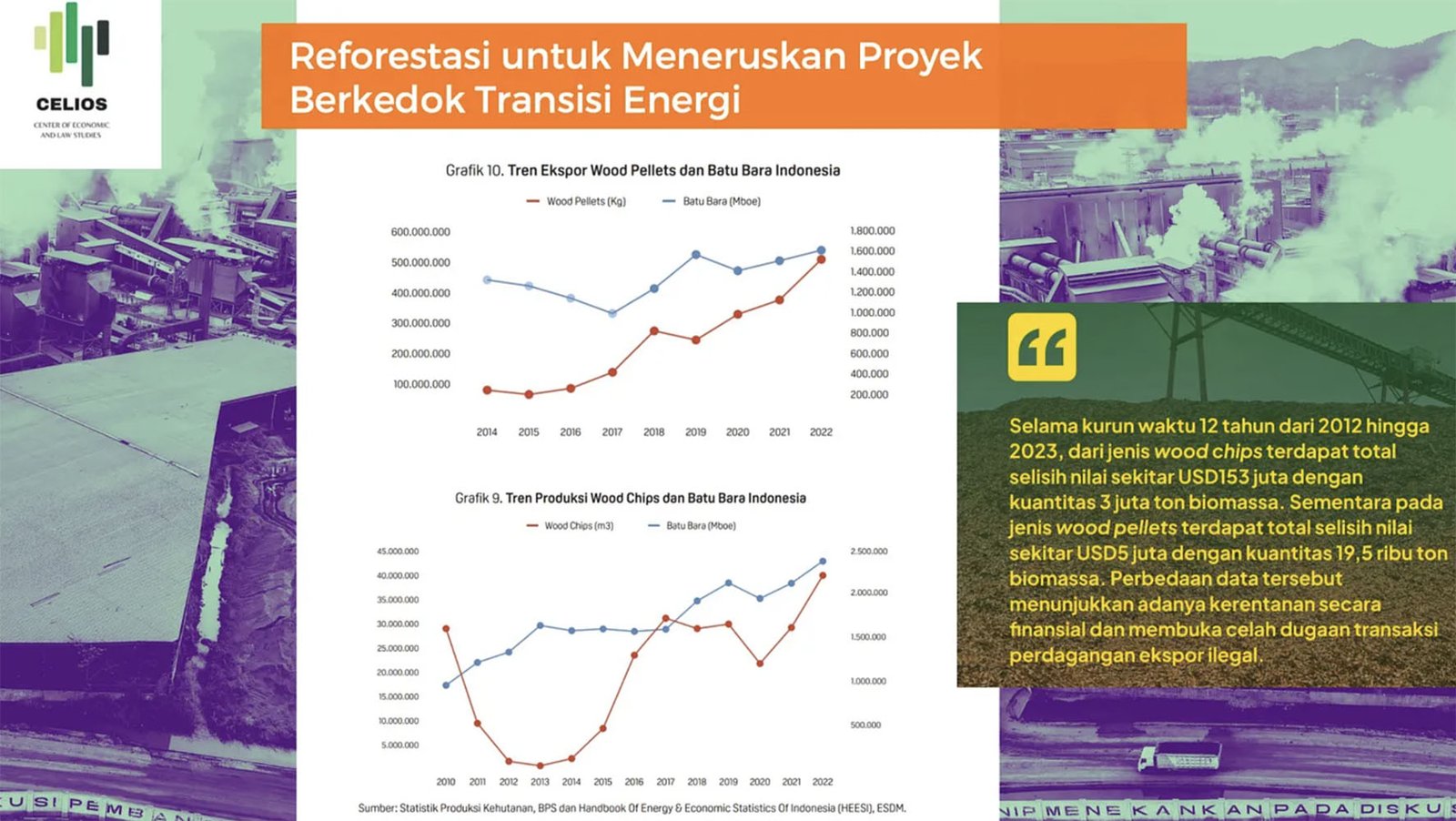
“Reforestation for Continuing Projects Disguised as Energy Transition, 12-Year Period (2012–2023).” Source: Celios
What we are offered is not a transition, but a mirage.
Human Rights and Global Credibility
The contradictions run deeper. A government that speaks of justice abroad, yet arrests students and activists at home, risks losing credibility.
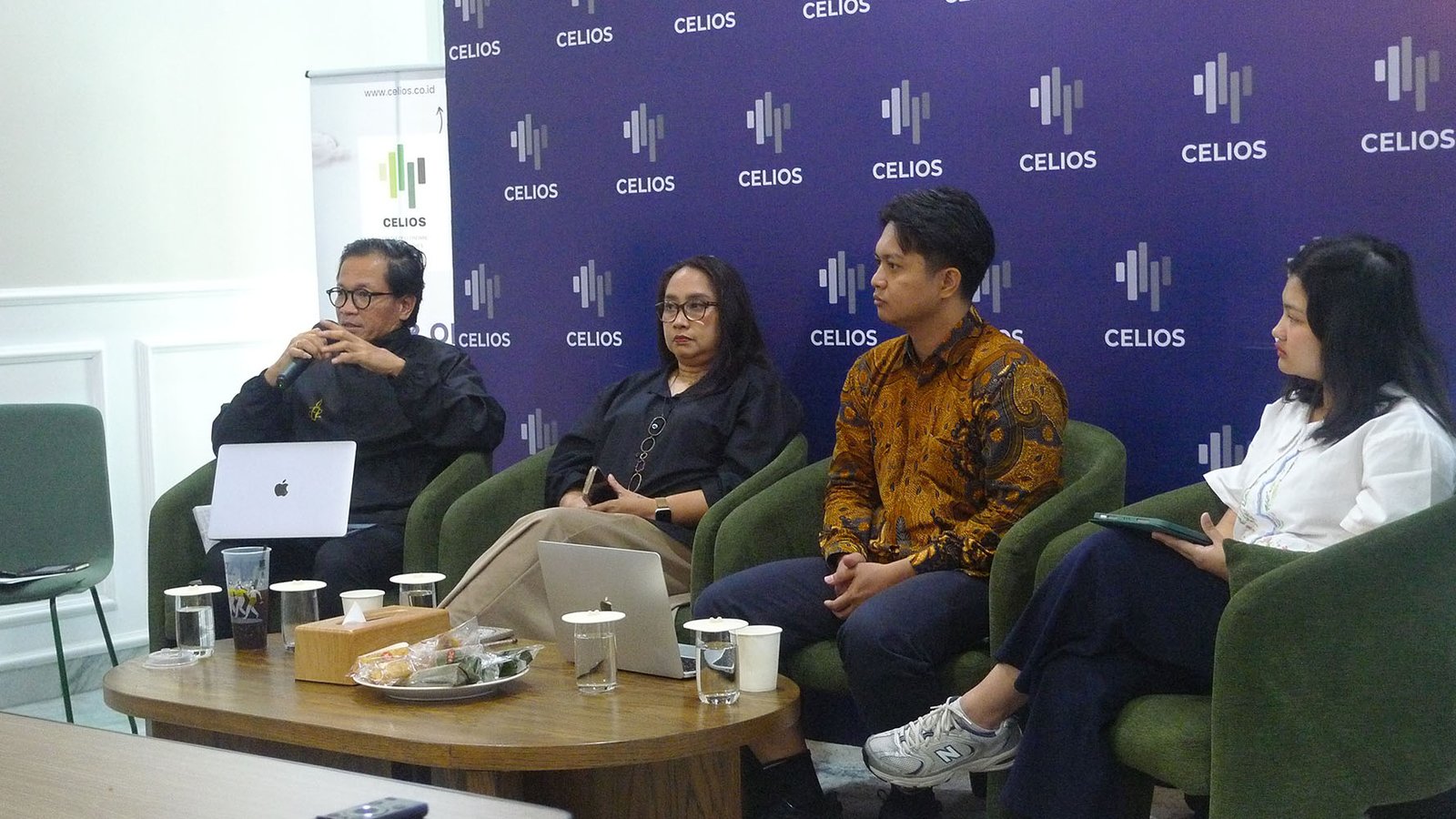
Usman Hamid; “What’s the point of polishing rhetoric abroad while ignoring human rights at home?” Source: JustCop, September 2025
As Usman Hamid of Amnesty International Indonesia put it: “What’s the point of polishing rhetoric abroad while ignoring human rights at home?”
Global leadership cannot be built on silencing dissent or delaying justice. It requires the courage to confront uncomfortable truths starting with how we treat our own citizens.
Beyond Rhetoric: A Call for Justice
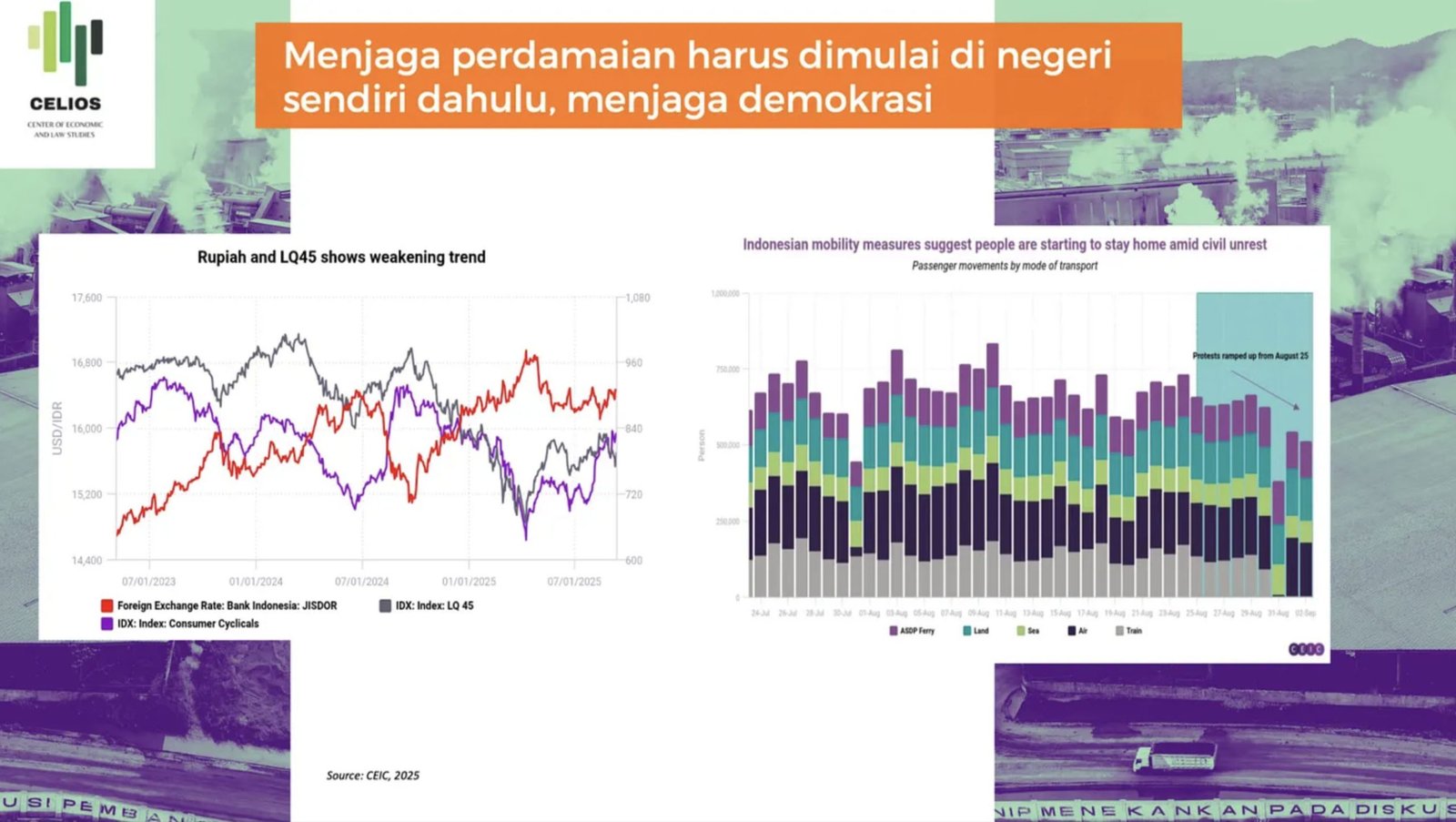
“Rupiah and LQ45 shows weekening trend & Indonesian mobility measures suggest people are strating to stay home amid civil unrest.” Source: Celios
Prabowo’s speech was meant to inspire, but it leaves us with uneasy questions. Can we really lead globally if we fail to deliver justice domestically? Can seawalls and net-zero pledges mean anything if forests continue to fall, if coal plants keep burning, if farmers and fishers struggle to survive?
Diplomacy without justice is empty. Climate action without equity is incomplete.
As COP30 approaches, Indonesia stands at a crossroads. We can continue down the path of contradictions, grand speeches abroad, fragile realities at home or we can choose to align words with action.
True leadership requires consistency, transparency, and above all, justice. And that work begins not in New York, but here on our lands, in our forests, and in the lives of the people most affected by this crisis.
Reflection: The world does not need another speech. It needs proof that promises can be kept, and that justice, climate, social, and human rights are more than rhetoric.