
Beyond rhetoric and failed projects: agrarian reform is the only path toward food justice and climate resilience.
Source: JustCop 2025
Indonesia government continues to push food estate mega-projects and free meal programs as supposed solutions to the food crisis. Yet, behind these ambitious promises lies a deeper problem: shrinking farmland, displaced Indigenous communities, and a growing dependence on extractive models that weaken both ecosystems and justice. True solutions do not lie in more land grabs or top-down projects, but in agrarian reform that restores land, power, and dignity to farmers, Indigenous peoples, and vulnerable communities.
A Stage of Promises, but the Wrong Solutions
Once again, the Indonesian government is offering food estate projects and the Free Nutritious Meal (MBG) program as answers to the country’s food crisis. On the surface, they sound like bold initiatives. But scratch beneath the surface, and they reveal the recycling of old, failed models.
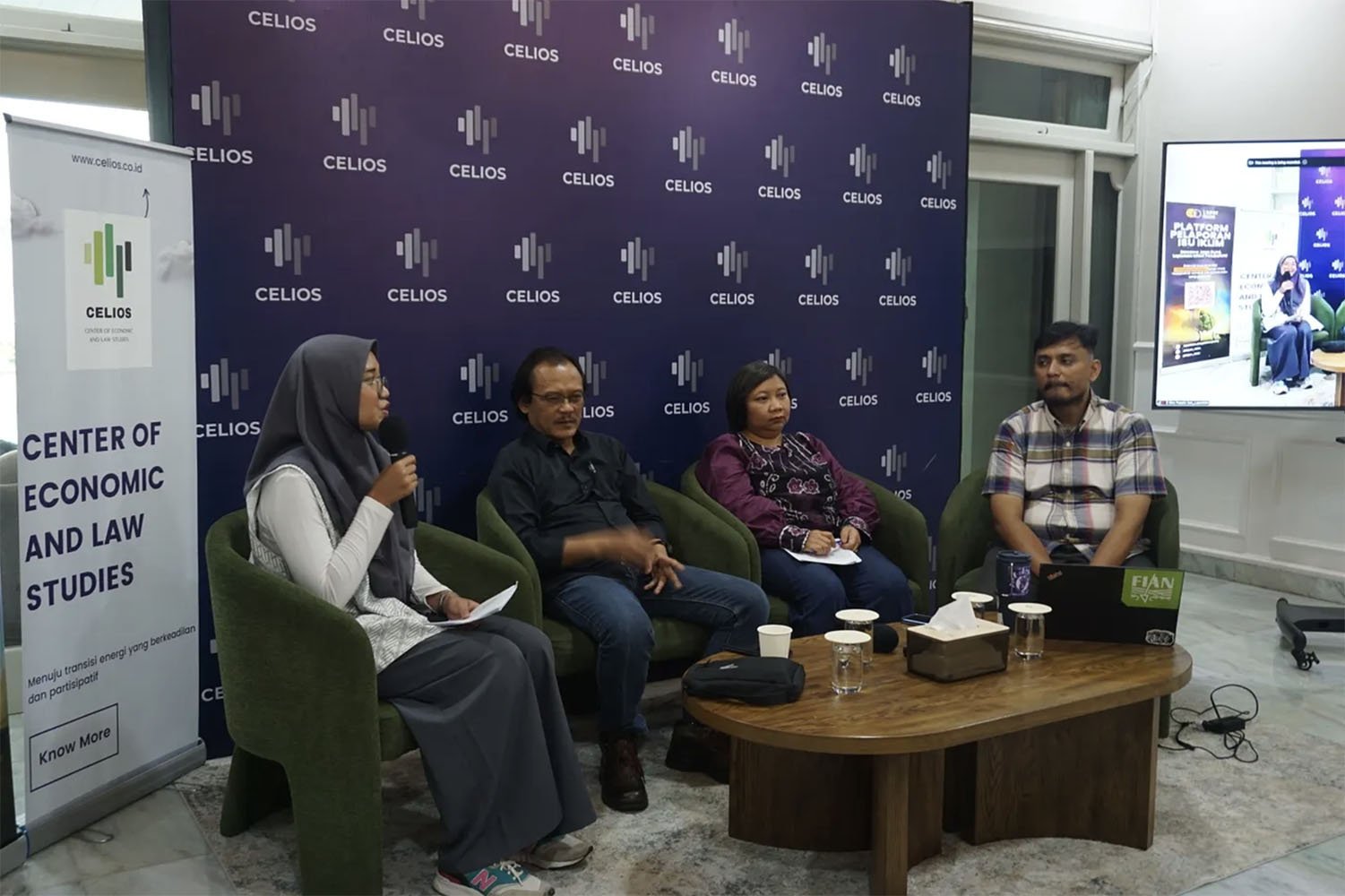
During the Nexus of the Triple Planetary Crises discussion hosted by JustCOP, Lapor Iklim, and CELIOS, civil society voices were clear: food estates and MBG do not solve the structural problems of food insecurity. Instead, they deepen inequality, displace Indigenous communities, and weaken biodiversity and climate resilience.
Food Sovereignty vs. Food Security
Professor Dwi Andreas Santosa of IPB University reminded us that food sovereignty is not the same as food security. Food security might mean importing rice to fill national stocks. Food sovereignty, however, is about farmers controlling land, seeds, and policies that shape their livelihoods.
“Every food estate project undermines the four key pillars of sustainable food systems,” Andreas said. “If forced, they will only create new crises ecological, economic, and social.”
The Human Right to Food
Marthin Hadiwinata of FIAN Indonesia called food estates more than a technical failure: they are a violation of the human right to food.
The facts are sobering:
- 17.7 million Indonesians suffer from hunger.
- 123 million cannot afford nutritious food.
In place of diverse, nutritious diets, consumption of ultra-processed foods like instant noodles is rising. “These projects,” Marthin argued, “do not address hunger; they reproduce it.”
The way forward is not more mega-projects, but agrarian reform that restores land to small farmers and Indigenous peoples as the backbone of food production.
Human Rights and State Responsibility
Anis Hidayah, Chair of Komnas HAM, was blunt: “Food is a human right. The state has an obligation to respect, protect, and fulfill that right.”
Yet in practice, food estate and MBG projects often open the door to rights violations, forced evictions, environmental degradation, and criminalization of communities. Women, children, and Indigenous peoples remain the most vulnerable, but also the most frequently sacrificed.
Rice Politics and Old Wounds
Why does Indonesia remain trapped in its dependence on rice? The answer lies in political history. Since the New Order era, rice has been used as a symbol of political stability. This obsession sidelined local food systems, sago, sorghum, tubers that could have made Indonesia more resilient.
The result: fragile dependency, vulnerable every time the price of rice spikes.
Land for the People, Not for Food Estates
The conclusion from the discussion was clear: food estates and MBG are not solutions.
The real path out of crisis requires:
- Meaningful agrarian reform
- Protection of smallholder farmers and Indigenous peoples
- Empowerment of women, children, and vulnerable groups
- Inclusive and participatory food governance
The rallying cry could not be clearer:
“Land for the people, not for food estates.”
Toward COP30: Justice, Not Rhetoric
This discussion is part of a series of civil society interventions leading up to COP30 in Belém, Brazil. The global stage will hear many speeches about ambition and sustainability. But for Indonesia, credibility depends not on rhetoric abroad, but on justice at home.
Diplomacy is empty if it is not grounded in fairness, transparency, and accountability. True climate leadership begins in the fields of our farmers, in the forests of our Indigenous peoples, and in the daily lives of communities struggling with hunger and climate change.
Reflection: COP30 is not just about negotiations in Belém. It is about whether countries like Indonesia can prove that justice — not greed — is at the heart of their climate and food policies.