
Jakarta, 22 September 2025 — The so-called “Merauke Food, Energy, and Water Self-Sufficiency Project” has once again highlighted the intertwined crises of environmental degradation, human rights violations, and extractive economic practices in Indonesia. The Merauke Strategic National Project (PSN Merauke) in South Papua intended to liberate one million hectares for food, energy, and water production continues to displace Indigenous communities and degrade forests on a massive scale.
President Prabowo Subianto has publicly warned against corporate greed in state-level addresses, describing unscrupulous actors as “economic vampires” that exploit natural resources at the expense of the people. Yet, in practice, the government’s approach accelerating land clearance, reassigning forest areas, and granting permits without meaningful Free, Prior, and Informed Consent (FPIC) from affected Indigenous communities has entrenched precisely the kind of “greed economics” it rhetorically condemns.
Minister of Coordinating Affairs for Food Zulkifli Hasan confirmed on 16 September 2025 that the Merauke project will proceed with expedited processes, including land allocation, plantation concessions, and other approvals. Already, 481,000 hectares of land have existing spatial planning in place. However, these rapid approvals reveal a troubling exercise of arbitrary state power, favoring corporations over Indigenous rights and environmental sustainability.
Human and Environmental Costs
The implementation of PSN Merauke over the past year has caused widespread social and ecological harm: forced displacement, destruction of traditional livelihoods, and loss of critical ecosystems across tens of thousands of hectares. Armed military escorts and corporate operators of sugarcane and bioethanol plantations have cleared forests, wetlands, savannas, and sacred sites, disregarding both the communities’ rights and biodiversity conservation. From 2024 to August 2025, PSN Merauke has resulted in deforestation exceeding 19,000 hectares, exacerbating greenhouse gas emissions and undermining Indonesia’s climate commitments.
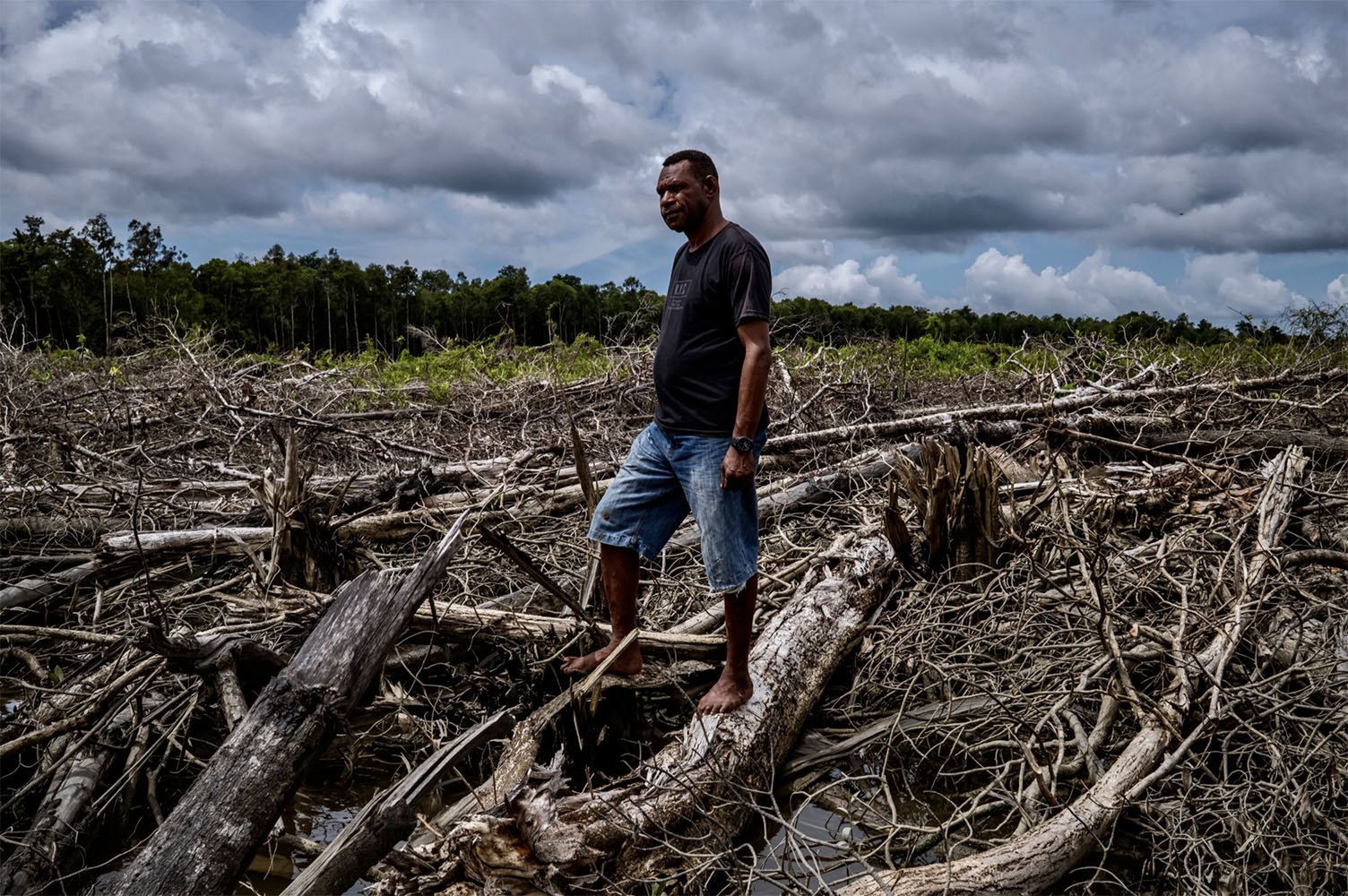
PSN Merauke 2 Food Estate Wanam — Cf. Gecko Project, 2025
Indigenous Malind Anim and Yei communities have been coerced into accepting inadequate compensation approximately IDR 300,000 per hectare for the surrender of their ancestral lands to PT Global Papua Abadi (GPA) and PT Murni Nusantara Mandiri (MNM). The scale of corporate control is extraordinary: these two companies, along with eight other sugarcane and bioethanol operators, hold concessions totaling over 560,000 hectares, controlled by the Fangiono and Martua Sitorus families, who also hold extensive palm oil permits across Papua.
This concentration of land ownership exemplifies “greed economics” in action: the maximum land-holding limits are bypassed, while corporate profits are prioritized over Indigenous livelihoods, environmental health, and intergenerational equity.
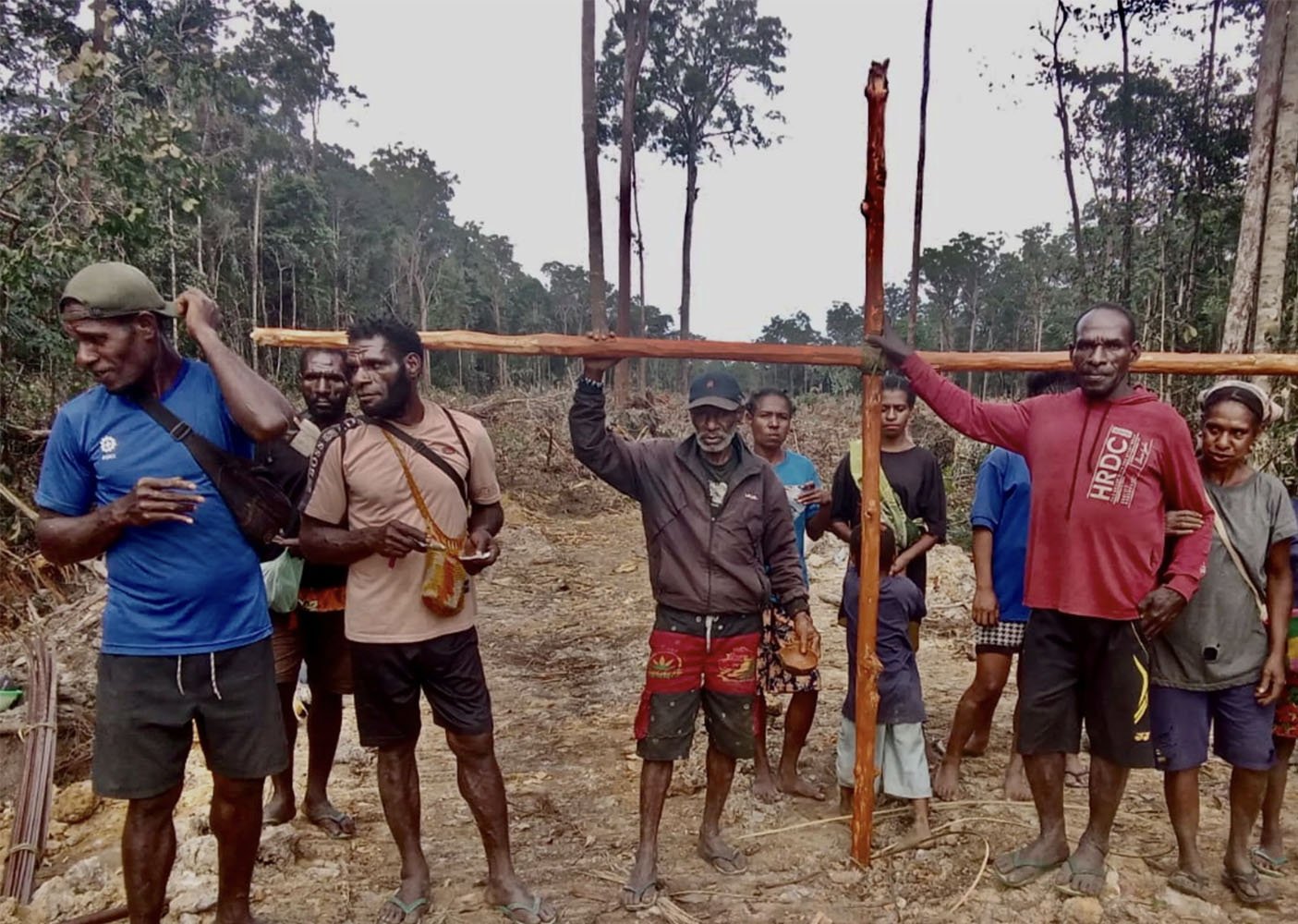
Customary Sasi Barrier at the PSN Wanam Merauke site in Salamepe, Formama, Sept 25
Advocacy Imperatives
The Pusaka Bentala Rakyat Foundation condemns the PSN Merauke policy framework, which accelerates approvals and facilitates the transfer of Indigenous lands to corporations without transparency or meaningful consultation. Such practices contradict Indonesia’s constitutional obligations, international human rights standards, and environmental sustainability principles.
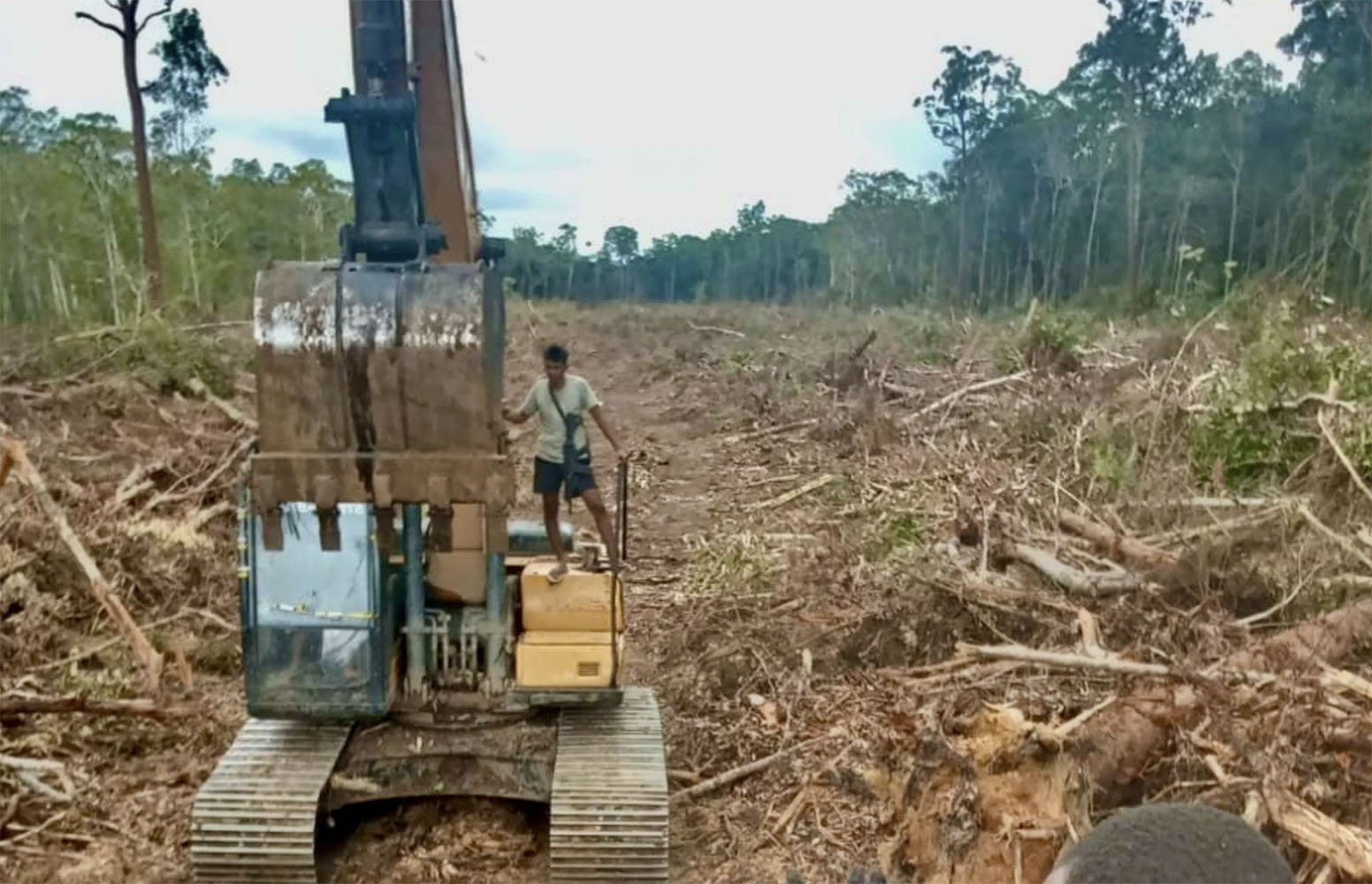
Photo of military guards during excavator operation at the PSN Project — Salamepe, Formama, Sept 25
We call on the Government of Indonesia to:
- Halt large-scale forest clearance and extractive practices that compromise ecological balance and Indigenous rights.
- Reassess PSN Merauke, ensuring that projects are not manipulated to favor corporate elites at the expense of local communities.
- Act decisively to uphold human rights, including the protection of Indigenous land rights and the recognition of FPIC.
- Empower regional authorities in Merauke and South Papua to use special autonomy provisions to safeguard Indigenous interests and promote equitable, sustainable economic development.
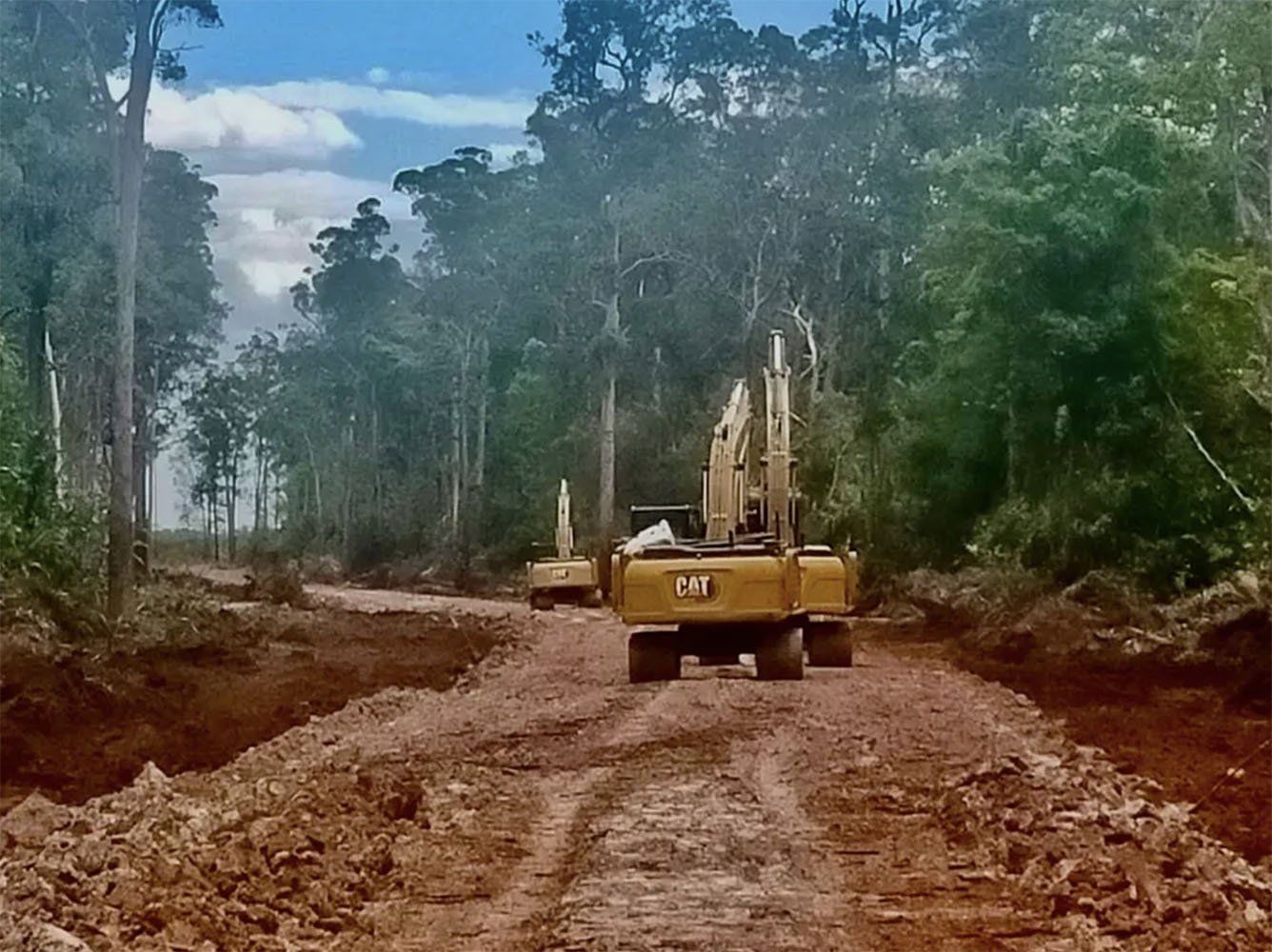
Kwipalo_Agodai Customary Forest, cleared by PT MNM, Sept 25
Connecting Local Struggles to Global Climate Justice
The PSN Merauke case illustrates why Indonesia’s climate commitments cannot be separated from land rights, social equity, and corporate accountability. Ahead of COP30, global attention will focus on ambitious climate action, energy transition, and finance for loss and damage. The uncontrolled deforestation and social displacement in Merauke directly undermine these goals, increasing emissions and exposing systemic governance gaps.
Indigenous land protection and equitable, sustainable resource management are therefore central not only to human rights and social justice but also to Indonesia’s credibility on the international climate stage. COP30 presents an opportunity for the global community and Indonesian policymakers to align rhetoric with action ensuring that climate pledges translate into tangible protection for forests, communities, and ecosystems.
Merauke is not just a local tragedy; it is a microcosm of the broader struggle for climate justice, Indigenous rights, and responsible governance. The international spotlight of COP30 offers a chance to correct course, amplify Indigenous voices, and ensure that development projects do not sacrifice people and the planet for profit.